
The REX Framework
A Unified Investment Architecture for Managed Capital Deployment, Structured Capital Appreciation & Strategic Wealth Oversight
Framework Architecture
The REX Framework is structured as a vertically integrated investment architecture. Asset Management forms the portfolio execution foundation, Capital Appreciation introduces structural allocation, and Wealth Management provides strategic oversight across the full capital lifecycle.
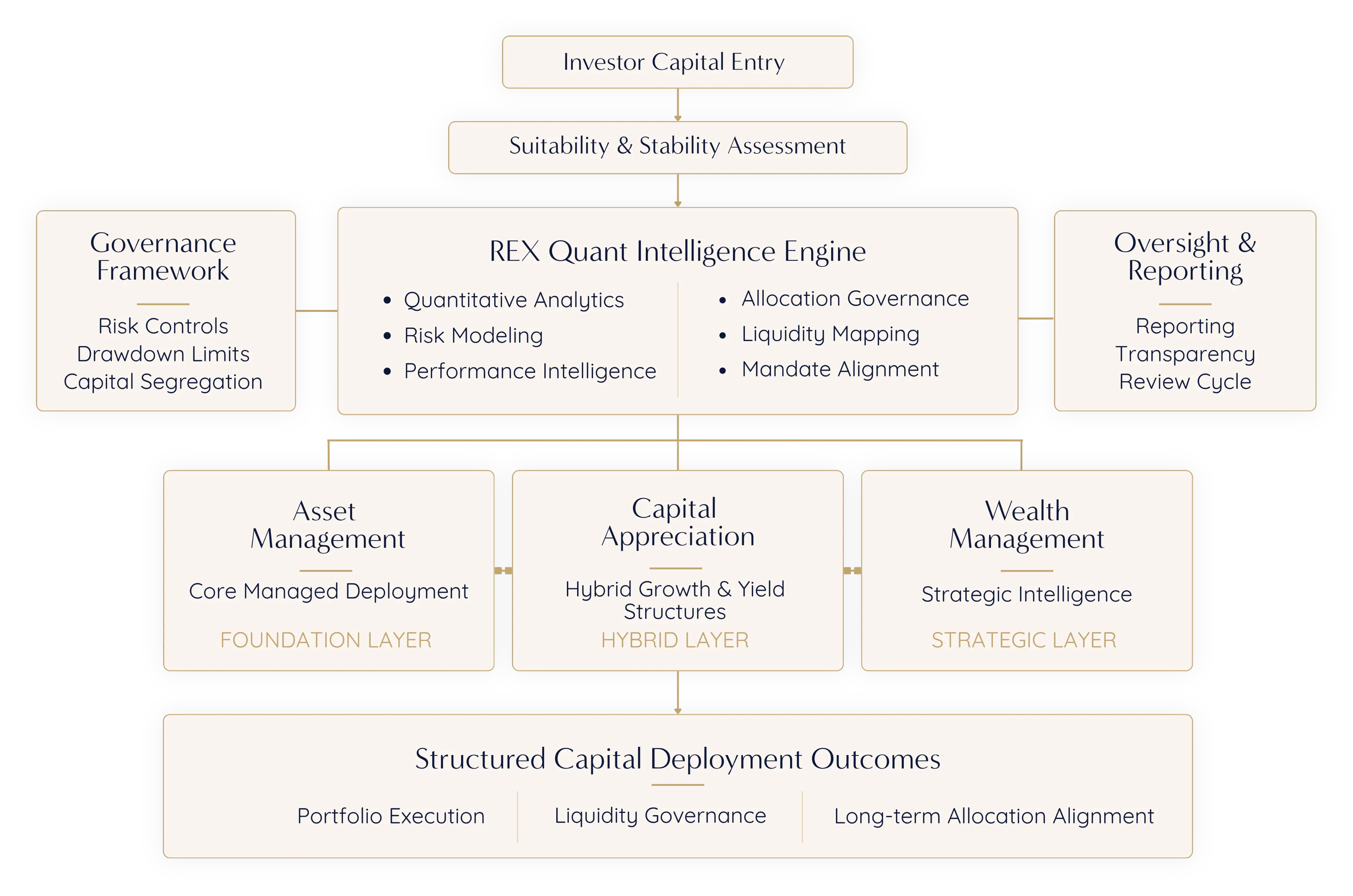
Investment Architecture Overview
The REX Framework is structural, not promotional. It defines how capital is structured across layers under unified governance, liquidity parameters, and mandate discipline. The architecture is designed to ensure
Layer-based capital structuring
Defined suitability routing
Unified reporting standards
Embedded risk controls
Asset Management
Core Managed Capital Deployment
The Foundation Layer forms the operational base of the REX Framework. It focuses on disciplined capital deployment through managed portfolio mandates governed by defined risk parameters.
Key Characteristics:
- Mandate-defined portfolio execution
- Pre-defined drawdown thresholds and risk tolerance parameters
- Allocation methodology governed by mandate parameters
- Performance reporting discipline
Explore Asset Management


Capital Appreciation
Hybrid Capital Allocation Structure
The hybrid layer integrates managed capital exposure with dual-structure allocation
Key Characteristics:
- Dual-structure allocation model
- Managed mandate allocation
- SPV-Based Structured Allocation Component
- Defined liquidity and lock-up parameters
Explore Capital Appreciation
Wealth Management
Strategic Intelligence Wealth Management
The Strategic Layer represents the oversight layer of the REX Framework. Wealth Management coordinates allocation governance, long-term structuring decisions, and cross-layer capital calibration. Designed for capital participants requiring integrated capital architecture beyond portfolio execution.
Key Characteristics
- Strategic capital oversight
- Cross-Layer Capital Allocation Governance
- Liquidity Structuring & Inter-Layer Capital Calibration
- Long-term mandate structuring
Explore Wealth Management

Risk Management & Governance Framework
Risk and capital controls are embedded across all layers of the REX Framework.
- Defined risk boundaries
- Drawdown monitoring
- Mandate enforcement
- Allocation discipline
Governance standards remain uniform across all capital deployment layers

Liquidity Structure & Capital Controls
Liquidity architecture varies by layer but operates under unified capital discipline.
Foundation Layer
Periodic liquidity windows as defined in the managed mandate
Hybrid Layer
Segmented liquidity structure - managed account periodic liquidity; SPV allocation subject to defined lock-up terms
Strategic Layer
Liquidity governance and capital planning oversight
Terms are defined within each mandate agreement.

Reporting, Transparency & Oversight Standards
All capital deployment layers follow a unified reporting framework:
- Structured performance reporting
- Allocation transparency
- Review cadence
- Oversight documentation
Transparency is integrated into the architecture.
Capital Participant Eligibility & Admission Process
The REX Framework is designed for:
- —Professional Clients
- —High-Net-Worth & UHNW Individuals
- —Family Offices
- —Institutional Capital Allocators
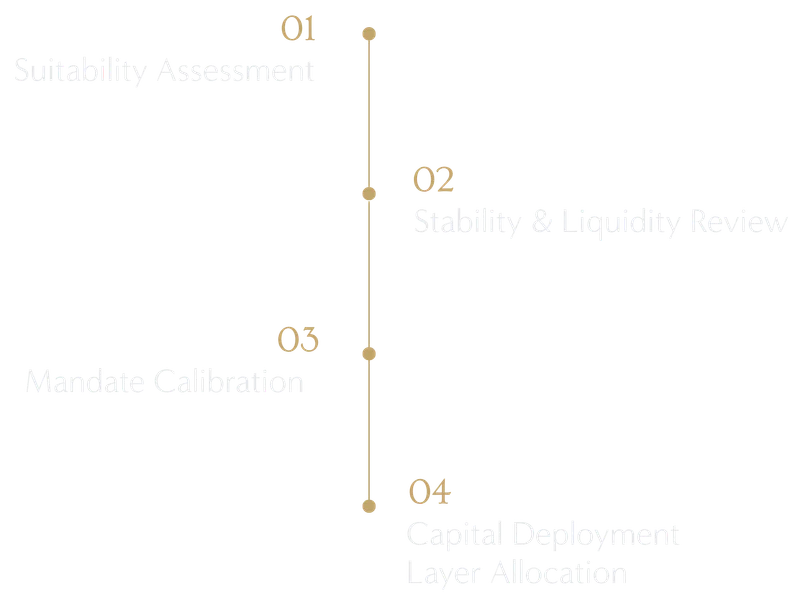
Admission process commences with a structured capital evaluation.

Initiate Capital Admission Review
Capital deployment proceeds only after mandate alignment, liquidity clarity, suitability and stability assessments are completed.
References to structure, allocation, or oversight do not imply capital protection unless explicitly defined within a legally executed mandate.
Risk Disclosure
All investments involve risk. Performance outcomes are not guaranteed. Liquidity Windows & Lock-Up Parameters, allocation structures, and mandate parameters are defined within client agreements and subject to applicable regulatory standards.
The REX Framework is a structural investment architecture designed to organize capital deployment across multiple integrated capital deployment layers It does not constitute an offer to sell, a solicitation to buy, or a recommendation to invest in any financial instrument, security, or managed mandate. Capital is exposed to market risk, liquidity risk, counterparty risk, and structural risk depending on the applicable mandate and capital deployment layer Performance outcomes are not guaranteed, and past performance is not indicative of future results Capital deployed under the Foundation Layer (Asset Management) is subject to portfolio risk parameters and drawdown controls as defined in the applicable investment mandate.\nCapital deployed under the Hybrid Layer (Capital Appreciation) may include SPV-Based Structured Allocation Components, including allocations subject to defined liquidity schedules and lock-up periods as outlined in the relevant agreement The Strategic Layer (Wealth Management - Wealth Management) provides oversight and allocation governance. It does not eliminate investment risk and does not guarantee capital preservation Liquidity Windows & Lock-Up Parameters, allocation structures, risk parameters, reporting standards, and withdrawal conditions are governed exclusively by executed client agreements and mandate documentation Nothing within this framework should be interpreted as tax, legal, or regulatory advice Clients are responsible for obtaining independent professional advice where required Participation within the REX Framework may be restricted to eligible Professional Clients or other qualified capital participants, subject to jurisdictional regulations and internal suitability assessment procedures Rexwood Capital reserves the right to amend structural components of the REX Framework in response to regulatory, market, operational, or governance requirements The availability of capital deployment structures described within the REX Framework may be limited by regulatory permissions applicable in specific jurisdictions Access to certain mandates or allocation structures may be restricted based on investor classification, capital thresholds, and regulatory requirements.